How to Keep Pigeons Away From Farm Buildings and Grain Stores
Posted on the
How to Keep Pigeons Away From Farm Buildings and Grain Stores
Pigeons can become a persistent problem on farms, particularly where buildings provide shelter alongside easy access to grain, animal feed and water.
Barns, livestock buildings, machinery sheds and grain stores can all provide suitable places for pigeons to roost and nest. Once birds become established, droppings, feathers and nesting material can build up around working and storage areas.
Keeping pigeons away therefore isn’t simply about moving birds on. Effective control means understanding why pigeons are using the farm and reducing the things that are attracting them.
Bawcro provides specialist Agricultural Pest Control in Yorkshire alongside professional Pigeon Pest Control in Yorkshire for farms, estates and rural businesses.
Why Are Pigeons Attracted to Farm Buildings?
Farms can provide pigeons with almost everything they need in one location.
Large buildings offer shelter from the weather and potential nesting and roosting sites while grain, seed and animal feed can provide a readily available food source.
Pigeons may be attracted to:
- Grain stores
- Feed stores
- Livestock buildings
- Barns
- Machinery sheds
- Roof spaces
- Building ledges
- Beams and roof structures
- Spilled grain and animal feed
- Open storage areas
Once pigeons find a reliable source of food and shelter, they can return repeatedly and become established across the site.
Why Are Pigeons a Problem on Farms?
A small number of pigeons can develop into a much larger problem if the site continues to provide suitable feeding, roosting and nesting opportunities.
Pigeon activity can result in:
- Droppings around buildings and equipment
- Contamination around animal feed
- Feathers and nesting material
- Fouling around machinery
- Blocked gutters and drainage
- Nesting within buildings
- Increased cleaning requirements
- Damage to crops from wood pigeons
The type of pigeon involved can also affect the approach required.
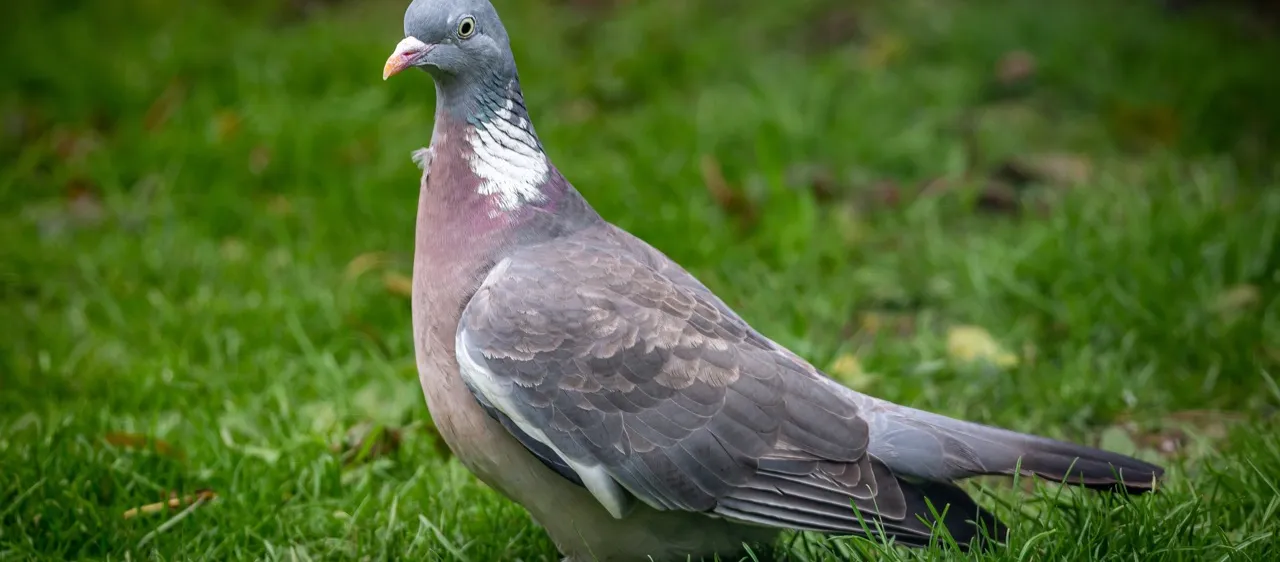
Feral pigeons are often associated with buildings, grain and feed while wood pigeons can cause significant problems around crops and agricultural land.
Our Pigeon Pest Control in Yorkshire service covers both feral and wood pigeon problems.
How Do You Stop Pigeons Getting Into Farm Buildings?
Preventing pigeons from accessing buildings is one of the most effective ways of reducing problems.
The first step is identifying how birds are getting inside.
Identify Access Points
Agricultural buildings aren’t always designed to exclude birds.
Pigeons may enter through:
- Damaged cladding
- Open doors
- Gaps around roofs
- Broken panels
- Ventilation openings
- Eaves
- Damaged doors
- Open sections of barns and sheds
Watching where pigeons enter and leave can help identify the main access points.
Once these have been established, appropriate Pest Proofing can be considered.
Pigeon Proofing Farm Buildings
Pigeon proofing can be used to prevent birds accessing particular areas or establishing themselves on structures.
Depending on the building and level of activity, this may include:
- Pigeon netting
- Mesh
- Pigeon spikes
- Access prevention
- Proofing roof structures
- Closing suitable entry points
- Protecting established roosting locations
There isn’t one proofing system that is suitable for every agricultural building.
The way the building is used, ventilation requirements, vehicle access and day-to-day farm operations all need to be considered.
Bawcro’s Pest Proofing Services in Yorkshire can be incorporated into a wider pigeon management programme.
How Do You Keep Pigeons Out of Grain Stores?
Grain stores can be particularly attractive to pigeons because they combine shelter with a potential food source.
Preventing pigeons from entering is preferable to repeatedly dealing with contamination once birds are established inside.
Good management should include:
- Identifying and closing access points where practical
- Cleaning up spilled grain
- Reducing accessible food sources
- Monitoring pigeon activity
- Keeping doors closed where operations allow
- Maintaining damaged areas of the building
- Preventing birds roosting above stored grain
Pigeon control should also be considered alongside the wider pest risks associated with stored grain.
Bawcro provides specialist Grain Store Management to help farms manage pest risks within grain storage environments.
Can Pigeons Contaminate Stored Grain?
Pigeons entering grain stores can leave droppings, feathers and nesting material around storage areas.
This makes bird access particularly undesirable where grain and other agricultural products are being stored.
If pigeons are repeatedly entering a grain store, simply moving them out won’t necessarily stop them returning.
The access points, food source and surrounding pigeon population should all be considered.
Our Agricultural Pest Control service takes a wider view of pest activity across the farm rather than looking at each problem in isolation.
Why Is Good Housekeeping Important?
Accessible food is one of the biggest reasons pigeons remain around agricultural sites.
Spilled grain and animal feed can provide a reliable food source that encourages birds to stay in the area.
Regular housekeeping can help reduce this attraction.
Particular attention should be given to:
- Grain spills
- Feed around livestock areas
- Damaged feed bags
- Waste grain
- Areas beneath conveyors
- Loading and unloading areas
- Feed storage
Removing accessible food won’t necessarily solve an established pigeon problem on its own but it can make the site less attractive and support other control measures.
What About Pigeons Nesting in Farm Buildings?
Farm buildings can provide pigeons with sheltered nesting sites that are difficult to reach.
Nests may be established around beams, ledges, roof structures, machinery areas and other relatively undisturbed locations.
Wild birds, their eggs and active nests are protected by law, so active nests shouldn’t simply be disturbed or removed without establishing what can legally be done.
Where pigeons repeatedly return to the same building, the longer-term solution may involve preventing future access and removing opportunities for birds to nest once it is lawful and appropriate to do so.
For more information, read our guide to how to stop pigeons nesting on commercial buildings.
What Problems Can Pigeon Droppings Cause on Farms?
Repeated pigeon activity can result in significant amounts of droppings accumulating inside and around agricultural buildings.
This can affect machinery, working areas, livestock buildings, feed stores and grain storage environments.
Large accumulations of dried pigeon droppings also need to be approached carefully, particularly where they may be disturbed during cleaning or maintenance work.
Read our guide Are Pigeon Droppings Dangerous? What You Need to Know for more information about pigeon fouling and the problems it can create.
How Do You Keep Pigeons Away From Farm Yards?
Pigeons don’t necessarily spend all their time inside buildings.
Farm yards can provide feeding and resting opportunities that encourage birds to remain around the wider site.
An effective pigeon management programme may therefore consider:
- Buildings
- Feed sources
- Grain storage
- Waste areas
- Water sources
- Roosting locations
- Nesting sites
- Surrounding land
This is why simply installing a deterrent on one building doesn’t always resolve a larger pigeon problem.
Our specialist Agricultural Pest Control in Yorkshire service allows us to look at pest activity across the wider farm.
Do Pigeon Scarers Work on Farms?
Pigeon scarers and other deterrents can be useful in certain situations but their effectiveness depends on how and where they are used.
Pigeons can become accustomed to deterrents that remain unchanged for long periods, particularly if there continues to be a strong food source nearby.
Deterrents should therefore be considered as part of a wider management strategy rather than automatically being treated as a standalone solution.
For established pigeon populations, Bawcro can assess the site and recommend appropriate Pigeon Control based on the activity and environment.
What About Wood Pigeons Damaging Crops?
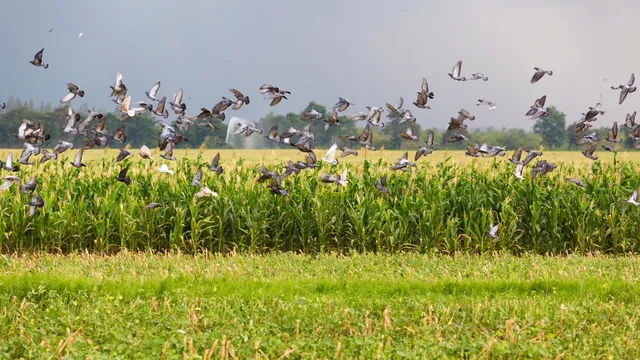
Wood pigeons can cause significant problems for arable farms by feeding on crops.
Unlike feral pigeons occupying buildings, crop damage may require a different management approach.
Fields and surrounding land need to be assessed alongside pigeon numbers, feeding patterns and the crop being affected.
Where population management is required, control must be carried out lawfully and only where appropriate.
Bawcro’s Agricultural Pest Control service includes practical pest management for farms and agricultural land across Yorkshire.
Can Pigeon Population Management Be Necessary?
On some farms and large rural estates, proofing individual buildings may only address part of the problem.
Where significant pigeon populations are established across the wider site, additional management may need to be considered.
Depending on the circumstances, this can include deterrents, habitat management, proofing and population control methods such as decoying or firearms where lawful and appropriate.
There isn’t one method that is suitable for every farm.
Bawcro assesses the pigeon species, numbers, site conditions and reason for control before recommending an appropriate approach.
Find out more about our wider Pigeon Pest Control in Yorkshire services.
Pigeon Control Should Look at the Whole Farm
Pigeon activity is often connected across different parts of an agricultural site.
Birds may feed around one building, roost in another and nest elsewhere.
Treating only the area where pigeons are most visible can therefore move the problem rather than resolve it.
A wider site assessment can help establish:
- Where pigeons are feeding
- Where they are entering buildings
- Where they are roosting
- Where they are nesting
- Which food sources are available
- Whether proofing is practical
- Whether deterrents are appropriate
- Whether wider population management is required
This allows the control strategy to be based around how pigeons are actually using the farm.
Agricultural Pigeon Control Across Yorkshire
Bawcro provides professional pigeon control for farms, grain stores, agricultural buildings and rural estates throughout Yorkshire.
We work across West Yorkshire, North Yorkshire, South Yorkshire and the wider Yorkshire region providing practical pest management for agricultural environments.
Our Agricultural Pest Control in Yorkshire service can incorporate pigeon management alongside other pest risks across the farm.
For specialist stored grain protection, find out more about our Grain Store Management service or visit our main Pigeon Pest Control in Yorkshire page for more information about pigeon control methods.
Need Help With Pigeons on Your Farm?
If pigeons are entering farm buildings, contaminating grain stores, nesting around agricultural structures or damaging crops, Bawcro can assess the wider problem and recommend an appropriate approach.
Rather than simply moving pigeons from one part of the farm to another, we look at how the birds are using the site and what can be done to provide effective long-term control.
Contact Bawcro to discuss pigeon control for your farm, grain store or agricultural site in Yorkshire.
Further Reading