How to Get Rid of Crows in the UK
Posted on the
How to Get Rid of Crows in the UK
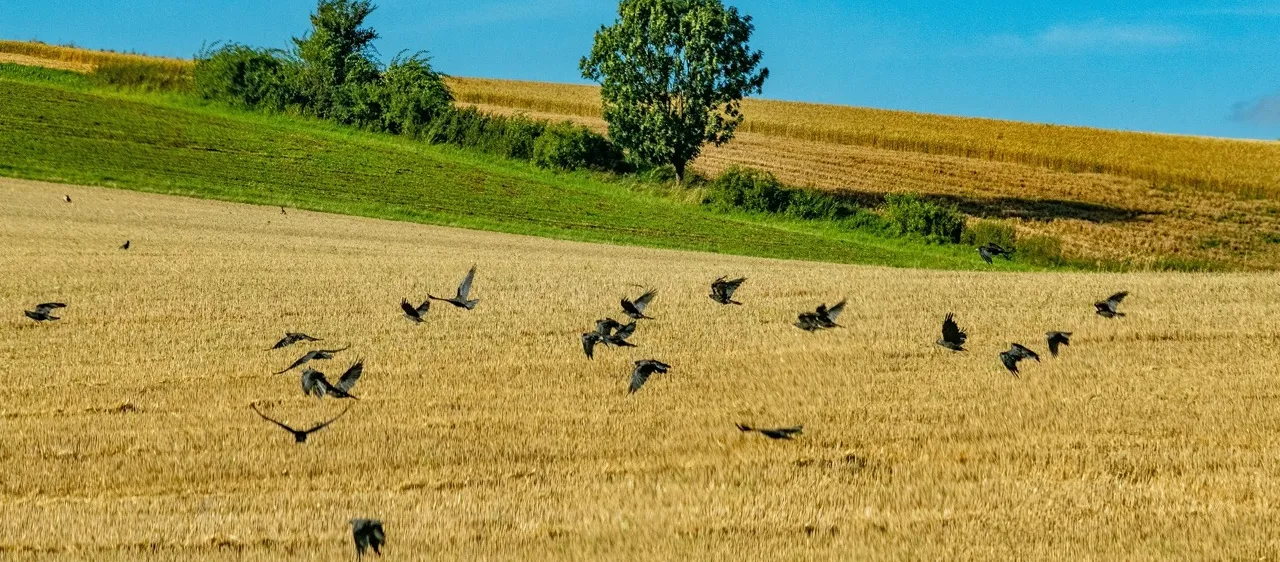
Crows are highly intelligent birds and once they find a reliable source of food or somewhere suitable to feed, roost or nest, they can become difficult to discourage.
For farms and estates, persistent crow activity can lead to damaged crops, punctured silage bales, problems around animal feed and concerns around young or vulnerable livestock. Crows can also cause problems around commercial sites and larger properties where they regularly gather, feed or roost.
So how do you get rid of crows in the UK?
The answer depends on why the crows are there, the species involved and the problem they are causing. Crow control in the UK is also subject to wildlife legislation, so simply removing or killing birds isn’t necessarily lawful.
Bawcro provides professional Crow Pest Control in Yorkshire for farms, estates, agricultural land and rural businesses, using practical control methods appropriate to the individual site.
Why Do Crows Keep Coming Back?
If crows repeatedly return to the same place, there is normally something attracting them.
Common reasons include:
- Crops and seeds
- Grain
- Animal feed
- Food waste
- Spillages
- Livestock areas
- Accessible buildings
- Suitable nesting sites
- Trees and other established roosting areas
- Reliable sources of water
Crows are intelligent enough to remember productive feeding locations.
This means simply frightening them away may only provide a temporary solution if the reason they are visiting hasn’t been addressed.
Understanding what is attracting them should therefore be one of the first steps in any crow control programme.
What Is the Best Way to Get Rid of Crows?
There isn’t one crow deterrent that works for every situation.
Effective control usually involves looking at the whole problem rather than relying on a single device.
Depending on the site, measures may include:
- Removing or reducing accessible food sources
- Improving storage of animal feed and grain
- Managing waste and spillages
- Changing habitat where practical
- Preventing access to buildings
- Visual deterrents
- Audible scarers
- Regular monitoring
- Decoying where appropriate and lawful
- Professional population management where lawful and necessary
The right approach will depend on the number of birds, where they are feeding or roosting and the damage being caused.
How Do You Keep Crows Away?
If crows are using an area because food is readily available, removing that food source can be one of the most effective first steps.
On farms this may involve reducing access to animal feed, clearing grain spillages and improving storage.
Around commercial or rural properties, waste management may be equally important.
Where crows are accessing buildings, physical exclusion and professional Pest Proofing may also form part of the solution.
The aim is to make the site less attractive rather than repeatedly frightening birds away without addressing why they keep returning.
What Are the Best Crow Deterrents?
Crow deterrents generally fall into several categories.
Visual Deterrents
Visual deterrents can include scarecrows, predator-shaped devices and other moving or reflective objects intended to make birds uncomfortable.
These can sometimes produce an initial response.
However, crows are intelligent and may learn that a stationary or predictable object presents no genuine threat.
Moving deterrents regularly and changing the type of deterrent used may help reduce this habituation.
Sound Scarers
Audible bird scarers are commonly used on agricultural land.
Again, their effectiveness can vary.
If the same sound occurs repeatedly without anything else happening, birds may eventually learn to ignore it.
Location, timing and how the scarer is used can therefore make a significant difference.
Physical Exclusion
Where birds are entering or roosting within buildings, preventing access may provide a longer-term solution.
The practicality of proofing will depend on the building and how it is used.
Farm buildings can be particularly challenging because large doors, ventilation requirements and regular vehicle movements often mean completely sealing a structure isn’t practical.
A site-specific approach is therefore important.
Do Crow Scarers Actually Work?
Crow scarers can work but they shouldn’t automatically be viewed as a permanent solution.
Crows are capable of becoming accustomed to repeated sights and sounds.
We’ve seen this ourselves on agricultural sites.
In our Crow Control on a Farm case study, the farm had already tried scarecrows and sound scarers but the crow problem continued.
The birds were damaging bales and crops and causing problems around livestock.
After assessing the site, Bawcro used decoying and controlled population management. Following several visits, crow numbers and the associated damage were significantly reduced.
This is why persistent crow problems often need a wider approach than simply installing another scarer.
How Do You Stop Crows Damaging Crops?
Crows can cause significant agricultural damage by feeding on seeds, newly emerging crops and other vulnerable areas.
The first step is to establish where the birds are feeding and how they are approaching the site.
Deterrents may form part of the solution but established feeding patterns can be difficult to break.
Moving scarers, changing tactics and addressing other attractions around the farm can help prevent birds from simply moving from one field to another.
Where damage continues, professional Agricultural Pest Control can assess whether additional control measures are appropriate.
How Do You Stop Crows Damaging Silage Bales?
Crows can puncture the plastic covering of silage bales.
Even relatively small holes can allow air and moisture into the bale, potentially causing spoilage and reducing the quality of the stored feed.
If crow damage is repeatedly occurring around bale storage areas, it is worth looking beyond the bales themselves.
Consider:
- Where the crows are roosting
- Whether food or feed is available nearby
- How many birds are regularly present
- Whether the birds are using nearby buildings or trees
- Whether existing deterrents have become ineffective
Persistent bale damage can be a sign of a wider crow problem across the farm.
Our Crow Pest Control service looks at the wider site rather than treating individual incidents in isolation.
How Do You Keep Crows Away From Animal Feed?
Animal feed can provide crows with a reliable food source.
Once birds learn where feed is available, they may return repeatedly.
Where practical:
- Clean up spilled feed
- Keep stored feed appropriately covered
- Reduce unnecessary access to feed stores
- Manage waste
- Check buildings for unnecessary access points
- Avoid leaving grain or feed exposed
For larger agricultural sites, feed areas should be considered as part of the wider Farm Pest Control programme.
How Do You Keep Crows Away From Grain Stores?
Grain stores can attract a range of pests if grain, dust or spillages remain readily available.
Good housekeeping and storage management are therefore particularly important.
Reducing access, dealing with spillages and monitoring activity around the store can help make the area less attractive to birds.
Bawcro’s Grain Store Management services support farms and agricultural businesses with pest management around stored grain and associated areas.
How Do You Stop Crows Getting Into Buildings?
Crows may enter agricultural and commercial buildings looking for food, shelter or somewhere to roost.
Potential access points should be identified before deciding on the best method of exclusion.
Depending on the building, professional Pest Proofing may help prevent birds gaining access to particular areas.
However, proofing agricultural buildings often requires a practical approach.
A farm building that needs large doors permanently open for machinery and livestock cannot necessarily be treated in the same way as a conventional commercial building.
Can You Remove a Crow’s Nest in the UK?
This is an area where care is needed.
Wild birds, their eggs and active nests are protected by law in the UK.
An active crow’s nest shouldn’t simply be removed or disturbed without first establishing whether doing so is lawful.
Correct identification of the bird is also important.
Carrion crows, rooks and jackdaws are all corvids and can sometimes be confused, particularly at a distance.
The legal position and available control options can depend on the species, circumstances and reason control is required.
If you’re dealing with nesting birds, professional advice should be obtained before taking action.
Is It Legal to Kill Crows in the UK?
Crows are wild birds and their control is regulated.
There isn’t a general right to shoot or kill crows simply because they are unwanted.
In certain circumstances particular species may be controlled under the relevant licences and conditions, but the reason for control, species involved and methods used all matter.
Non-lethal options should be considered where appropriate and any lethal control must comply with the relevant legislation and licence requirements.
For farms and estates experiencing significant crow problems, professional advice can help establish what control options may lawfully be available.
Can Decoys Be Used for Crow Control?
Decoying may form part of a professional crow management programme in appropriate circumstances.
Whether it is suitable will depend on the species, site, reason for control and applicable legal requirements.
It isn’t simply a case of placing a decoy on the land and expecting the problem to disappear.
Decoying needs to be considered as part of the wider management of the crow population and the particular problem occurring on the site.
When Is Professional Crow Control Needed?
Professional help may be appropriate where crow activity is persistent, significant damage is occurring or deterrents have repeatedly failed.
Examples can include:
- Repeated crop damage
- Damaged silage bales
- Large numbers of crows feeding on a farm
- Problems around animal feed
- Concerns around livestock
- Persistent activity around grain stores
- Birds repeatedly entering agricultural buildings
- Established roosting activity
- Deterrents no longer working
A professional assessment can help establish why the birds are present and which control methods are appropriate.
How to Get Rid of Crows on a Farm
Farms often require a different approach to other properties because there may be several reasons crows are using the same site.
They might feed on crops in one area, access livestock feed elsewhere and roost in trees or buildings nearby.
Treating one part of the problem may simply move the birds somewhere else on the farm.
We’ve covered this agricultural issue in more detail in our guide How to Get Rid of Crows on a Farm.
A whole-farm assessment can consider crops, livestock, feed, grain stores, buildings, bale storage, nesting areas and surrounding land together.
Professional Crow Pest Control Across Yorkshire
Bawcro provides professional Crow Pest Control in Yorkshire for farms, estates, agricultural land and rural businesses.
Our approach starts by understanding the problem and the site.
Depending on the circumstances, this may involve deterrents, changes to food and habitat, proofing, decoying or population management where lawful and appropriate.
We also provide wider Agricultural Pest Control for farms and rural businesses across Yorkshire.
Need Help Getting Rid of Crows?
If crows are damaging crops, bales, accessing feed or causing persistent problems on your farm, estate or rural property, Bawcro can assess the site and recommend an appropriate approach.
Find out more about our Crow Pest Control in Yorkshire or contact Bawcro Pest Control to discuss the problem.
Call Today: 0113 403 5504
Further Reading